What does it mean for your life to have a purpose?
To some this may be an exceedingly simple answer but to others, it could be paralyzing. To have a purpose is something that people will spend their entire lives striving for, it’s of the utmost importance to countless classical philosophers after all, what are we here for, what should we be doing, and what does it mean to be able to live in the first place.
I don’t have an answer, and I won’t lie, I’m not going to try and present one in this post, to do so would be facetious and pretentious, your purpose must be personal to you, and neither I nor anybody else can or should tell you what your purpose is.
What I do want to talk about is how different video games tackle the idea of creating your own purpose in a world devoid of an inherent one, it may not seem like it at first glance, but video games often tackle this idea of innate purpose, be it through finding purpose in the mundane, through redemption, or through hardship.
A Breath of Fresh Air
If I had to distill Breath of the Wild down to its core design philosophy, I’d say that this game is the result of crafting an experience that will give the player as many chances as possible to “Stop and smell the roses”
It’s one of the most revolutionary open world games ever made and easily one of the best examples of how to populate an open world with tasks for the player to do, so your world doesn’t feel like a barren waste of gigabytes. It’s in that where I think this game is worth discussing, and for that I’ll have to take a step down from the anecdotal seat and give the chair up to someone who had a personal experience with this game closer to that which I’m looking to talk about.
My girlfriend LOVES Breath of the Wild, she is obsessed with the idea of doing everything to the point where she hasn’t really gotten started on Tears of the Kingdom because she can’t stand the idea of leaving the world unfinished.
If you were to ask her what the purpose is for her playing Breath of the Wild, she’d say something along the lines of “I started it and now I have to finish it” But the thing is, she beat Calamity Gannon a long time ago, and one might think that it doesn’t get more “done” than defeating the final boss. To be clear my girlfriend is far from a completionist, Breath of the Wild is really the only game she plays outside of Mario Party, so what makes this game so appealing to the hardcore and non-hardcore audience alike.
Even though the story frames you as being on a time limit for your ultimate confrontation with Calamity Gannon, you really can take your time with it, and it incentivizes you to do so more than most games will ever take the time to do. Finding something to fill the time IS the purpose of this game, in my opinion there are very few games that can encapsulate the whimsey of being able to stray off the beaten path better than Breath of the Wild, the entire design philosophy of this game seems to be working together to not pull you too strongly in one direction as opposed to the rest, any direction is the right way when you’re going through a world as well thought out as this version of Hyrule.
And I know I’m not the first youtuber to mention this but the entire idea of slowing down and finding purpose in your surroundings is capped off perfectly by the soundtrack, particularly the ambient piano that plays whenever not in a place of interest. The curious, playful nature of the sporadic yet intentional notes puts you in a perfect mindset to be able to appreciate the world you’re working your way through.
I’ve spoken in the past about my struggles with slowing down and taking my time with things, most games I ignore side content and non-required objectives because I simply find it difficult to motivate myself to stray from that main path, I usually end up taking the path of least resistance, which in 99% of cases is running from main objective to main objective. But I don’t get that way with Breath of the Wild, the beauty of this game is that the path of least resistance is always right in front of you, no matter where you’re facing. Progress comes not in the form of reaching some antiquated quest marker on your map, well okay maybe it does, but the real purpose that you are meant to gleam from this game isn’t REALLY in the form of the main story, that’s a part of it for sure, but this world was crafted for the express purpose of being explored by you, and it would therefore be a shame to leave any rock unturned, after all, you might just find a Korok.
Purpose Through Redemption
In Red Dead Redemption 2 you play as Arthur Morgan, a man by many titles, but most prevalent, outlaw. When you meet him at the beginning of the game, he’s after having lived a life of crime, a life of violence and death. But Arthur Morgan isn’t an evil man, so long as you don’t make him one, I and most people who’ve played this game agree that if there were one “canon” ending, it’s saving John with high honor, and when you play the game this way, Arthur’s character shows another way one might find their purpose, in death.
Early in the game you go to collect a debt for Strauss, and delay all you like, there’s no way to make any meaningful progress with the story without fulfilling this request. Anyway, when you visit the man’s house to collect the debt he owes Strauss, Arthur beats the man senseless in attempts to make him caught up the money, but money isn’t what he coughs up, it’s blood. Blood that he spits back into the face of Arthur Morgan, condemning him to death. See the man was infected with Tuberculosis, a fatal diagnosis in 1899, one that Arthur is in turn afflicted with. This isn’t obvious right away, but throughout the game it becomes more and more apparent that something isn’t right with Arthur, and far later in the story, while riding through Saint Denis Arthur falls of his horse and is officially diagnosed after being dragged to the doctor by a family he’d taken the time to help earlier in the story.
From this moment on Arthur Morgan truly begins his path towards redemption, having to face his mortality brought to light whether he wanted to live the life he was forced into as a kid, in a strange sense, finding out that he would soon be dead finally gave Arthur some agency in the way he lived his life. In my opinion there’s no quote that encapsulates his journey towards redemption, and the way he inevitably feels about his fate at the end than this interaction between him and Charles.
Charles: “any day we can die. We’re riding to break an Indian Chief’s son out of a cavalry Fort, we could both die tonight. In a way it is a gift to know. In a way you’re lucky.”
Arthur: “sure don’t feel like it.”
Charles: “you still have time to make amends. The Others Hosea, Lenny, Sean, all of them. They didn’t. And what about the Callendar boys? Both killed trying to escape Blackwater. A more vicious pair of bastards there never was, and that’s all they were and ever will be.”
Arthur: “Maybe”
Charles: “You’re lucky. You got the chance to… to do something better… My guess is maybe that’s why your here now… either way, just keep your head strong, we’re close now.”
That’s all they were and ever will be, I believe that this line stuck closely with Arthur until the end, and it’s the impetus for his decision to spend what life he has left getting John and his family to safety. To Arthur Morgan, only in death was he able to find his purpose, when faced with his mortality, he found his true self, facing his death revealed to Arthur the possibility that, though he may not have always been a good man, he had the chance to die as one, and provided you made the right decisions in Arthur’s final days, he succeeds.
In this ending Arthur Morgan spends the last moments of life delaying Dutch and Micah so that John and his family can escape, his death is a beautiful moment, as he knows that he’s finally fulfilled the purpose he found for himself in his last days.
The final example I’d like to talk about is the one that’s been the most impactful for me personally, because it asks the unsettling, seemingly unanswerable question of, what happens when an immortal is without purpose.
Your Dark Soul
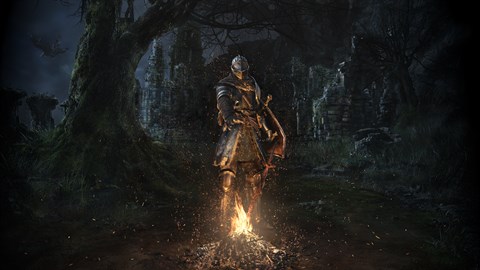
Dark Souls is a game that lives in infamy for countless reasons, it’s the standard for difficulty in the gaming industry and spawned an entire genre of games that, especially in recent years, has led to some really fantastic titles made by companies other than Fromsoft. But one interesting association that people seem to have with Dark Souls, particularly the first game is an emotional journey that so many people attribute to it. Just look for yourself, there are countless YouTube videos recounting how the journey through Dark Souls has genuinely saved people’s lives, I’m not kidding, please look for yourself, it’s astounding how many people attribute this game with a realization of self-worth or, as one might call it, their purpose. So, what is it about Dark Souls, this lonely hostile game that gives people these realizations?
The first thing you need to know about Dark Souls is that, unlike many modern games, it doesn’t try to hold your hand, in fact you might say it does the exact opposite. Dark Souls gives you the damage equivalent of a pocketknife, a way to heal, a vague idea of where to go and a pat on the back before sending you to fight a literal demon within 20 minutes. The world of Dark Souls is cruel and unfair, and in that sense it’s almost a microcosm of real life. It can often feel like everyone and everything is working against you, and you don’t have the tools to deal with what lies ahead, yet you’re expected to anyway, you really don’t have a choice. The game will never bend to your will, it will never suggest lowering the difficulty or give you any USEFUL tips, but you’re expected to power through, to keep struggling your way to the end of the world to either save or usurp it, and along the way you’ll encounter many other characters who, alongside you are made to deal with one of the main drawbacks to being an immortal undead in this universe, hollowing.
The process of hollowing is an integral concept to the story of Dark Souls and every single undead character in it, as an undead you are immortal, when you die you just come right back to life, so long as you have a drive to live, a purpose. Those who die without a purpose, or give up on one they had become hollow, a mindless eternal shell of their former self, an undead who goes hollow is lost forever. This can be seen as a representation of countless things as have been pointed out throughout the years, many believe hollowing to be a representation of the other players who couldn’t beat the game and decided to give it up, others, a stand-in for losing hope in real life and losing the battle with depression, whatever it means to you is a personal take away, and ultimately one of the reasons so many attribute Dark Souls with saving them in some way.
So where does that leave us in terms of analyzing Dark Souls through the idea of purpose? Well, I think hollowing is the exact concept that we’re looking for. Dark Souls views purpose as a drive that will keep you alive, if you live without a purpose, you may as well be a mindless hollow. Many characters quests end in that character becoming a hollow after losing their purpose in one way or another, some accept this fate, others reject it, all fall victim to it just the same, save for one notable exception.
Solaire is one of the few kind characters in the world of Dark Souls, he’s always happy to see you, and the purpose he’s chosen to push himself through the end of the world is finding his own sun. This seems abstract, and it’s meant to at the beginning, it’s unclear if Solaire himself even understands what he means by it. In the bad ending of his quest, he ventures down to Lost Izalith and meets a grim fate at the hands of a Sunlight Parasite. It latches on to his head and makes him think that he’s found his sun, that he himself has transformed into the sun he was looking for all this time, all the while controlling his body to attack you and, as its title of parasite implies, it steals nutrients from his body until there will be nothing left.
Ending his life here as he unknowingly attacks his one ally in this cruel world is realistically the best fate there is left for him in this ending, there’s no way to detach the parasite, in this version of events, Solaire is gone one way or the other, no matter what you do.
This is the reality for most characters in the world of Dark Souls, maybe all of them don’t get devoured by a sunlight parasite, but all of them face mortality and must hold on to their purpose for fear of losing themselves. Though this doesn’t have to be where it ends for Solaire, if you reach the hallway he loses himself in and kill the parasite before he enters the area, when you return he will be there, dejected, but alive. He’s disappointed in himself for not finding his sun sure, but he hasn’t hollowed, which means there’s hope.
This dialogue from Solaire implies that he either knows something we don’t about Lost Izalith, or that he intentionally sought out the parasite, and his disappointment comes from not being able to see the illusion it grants before the inevitable hollowing that would follow achieving his goal. While it may not be explicitly stated, Solaire has very nearly given up when you speak to him in the demon ruins, which is the last time you see him before his fate with the parasite is decided, and so I believe there’s a chance that him loosing himself to the parasite may have been a suicide attempt, he knew what illusion he would be shown, and wanted to use it to fulfil his purpose and finally give himself in to hollowing.
One way or the other, we’ve saved him from his fate, and going forward we can summon him to help us defeat Gwyn, the final boss of the game. In his own version of the world, I choose to believe that he defeated Gwyn himself using the experiences we’ve gone through together through the world of Lordran, in helping the chosen undead with various bosses throughout the game, Solaire helps us achieve the purpose we sought the whole time, and I really would like to believe that when he returns to his own world after helping us defeat Gwyn, he links the fire himself, becoming the sun he searched for in his own way.
In Dark Souls, losing purpose is the end, so the only way for anyone to make it in this cruel world is to forge a purpose for yourself to fight on no matter what.
The Purpose?
Now the key difference between Dark Souls and the previous examples that we’ve talked about is that, in the case of Breath of the Wild, the purpose that people will find with it has to do with a purpose for playing the game or spending your time in a more leisurely sense without feeling pressured to make huge leaps in progress to enjoy it, and in the case of Red Dead Redemption 2 it focuses on the purpose behind the life of the main character, showing a beautiful story that will often connect with the players, but ultimately not really change their lives in a meaningful sense due to the dissonance between the setting and life of Arthur and the modern day. But in my opinion what sets Dark Souls apart from these other examples is that it transcends the game itself and was able to provide PLAYERS with a purpose to gleam for their real lives, and I think that’s something truly special.
This is a real-world effect that this game has on real people, it can support and transform the lives of those who play it for the better if experienced in the right context, and of all the games we’ve discussed here today, I think that’s the most important takeaway, these games aren’t just ways to fill the time, they can be so much more than that. Gaming as a medium has the ability to create some of the most personal experiences that any form of fiction is capable of, and when all the stars align, a masterpiece like Breath of the Wild, Red Dead Redemption 2, or Dark Souls can emerge, and genuinely change the world for the better for having existed, and I think that’s pretty important to talk about, so please, don’t you dare go hollow.



 Jman.Blog
Leave a comment